Master your pronunciation
with AI
Our AI analyzes your speech and helps you improve with precise, actionable insights.
In collaboration with
Research, mentoring, and ecosystem support from ZHAW.
Startup Challenge winner
Winner of the ZHAW Startup Challenge organised by Startup Campus.

Pilot implementations with
Language-school partners piloting Spelly in real teaching environments.

Pronunciation Engine for Language Learners
Your
Audio Recording
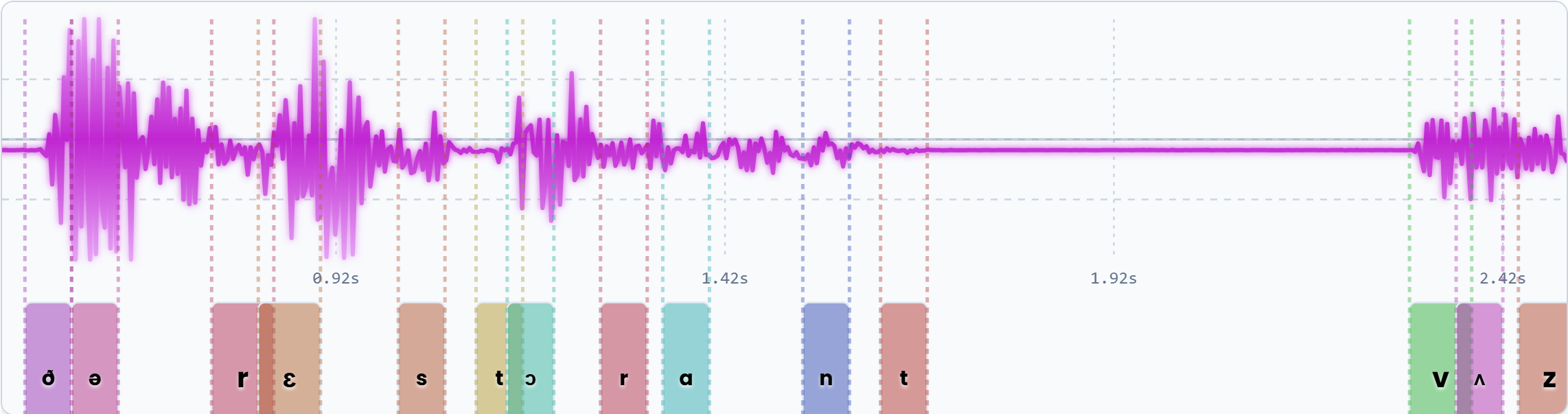
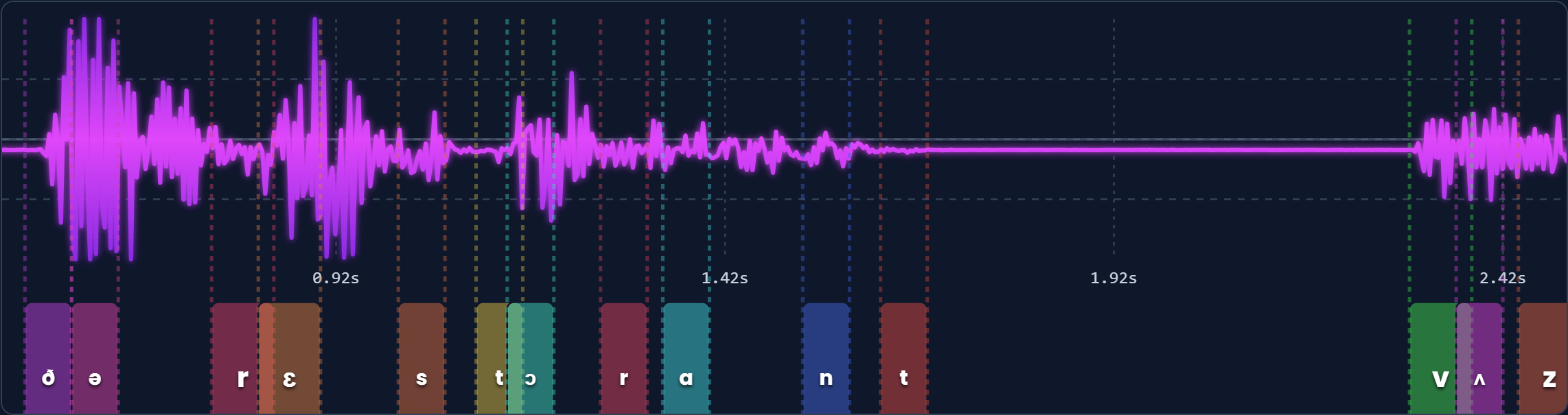
Detected Sounds
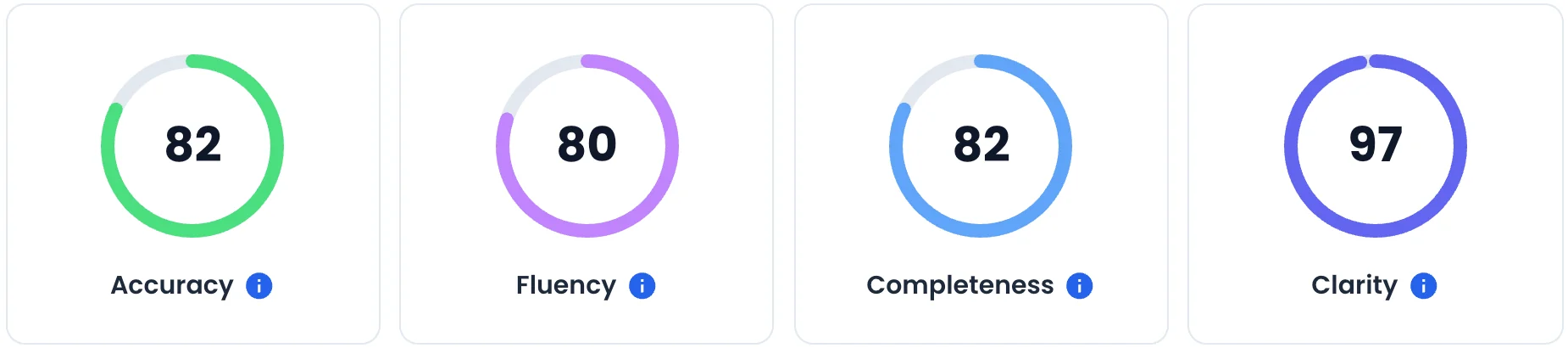
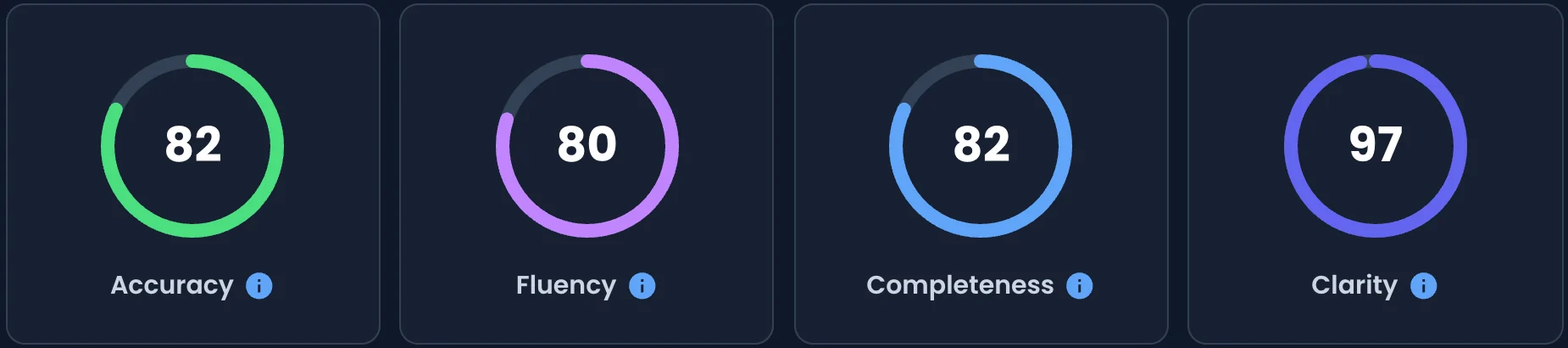
Obtain Insight Scores
Understand how to Improve
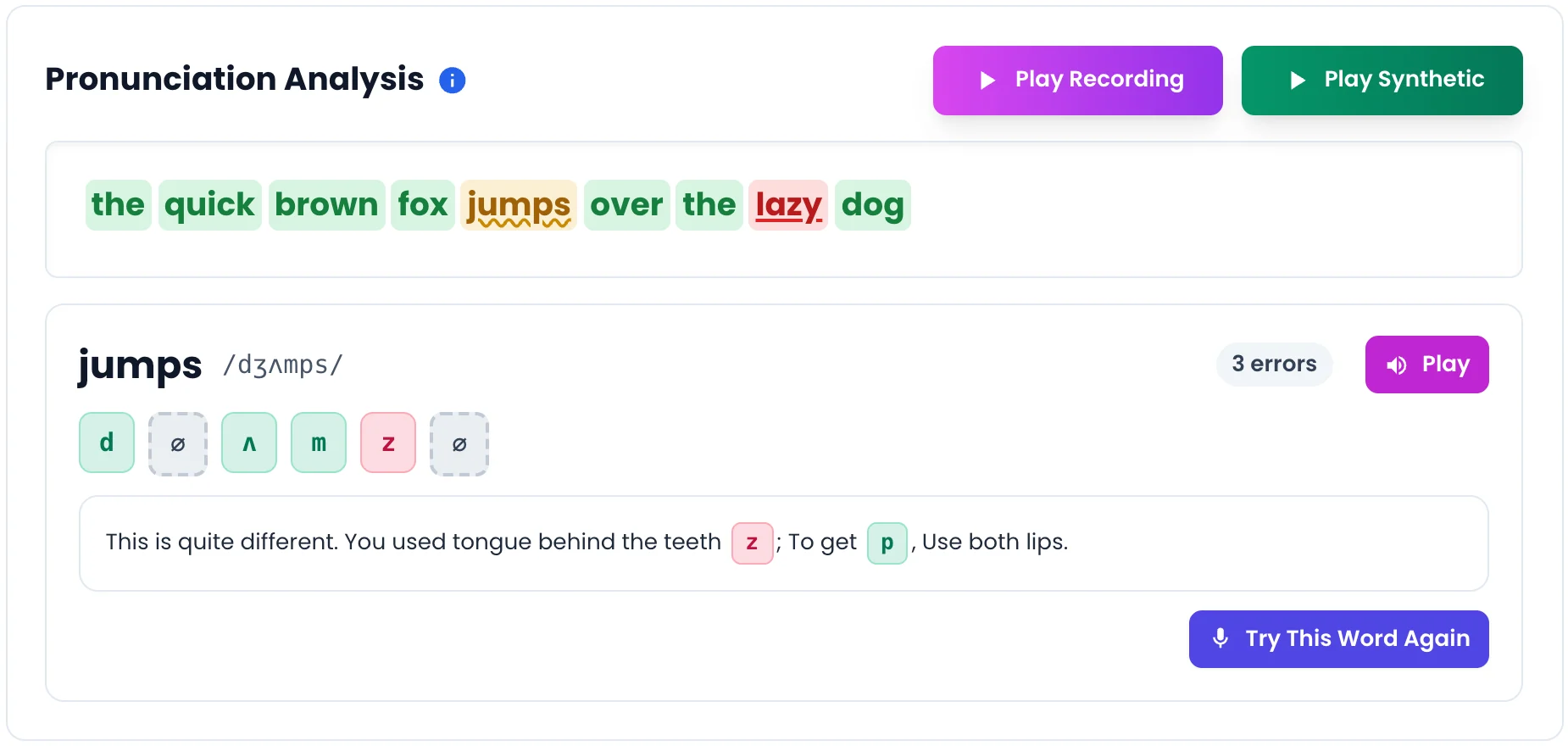
Practice what you need
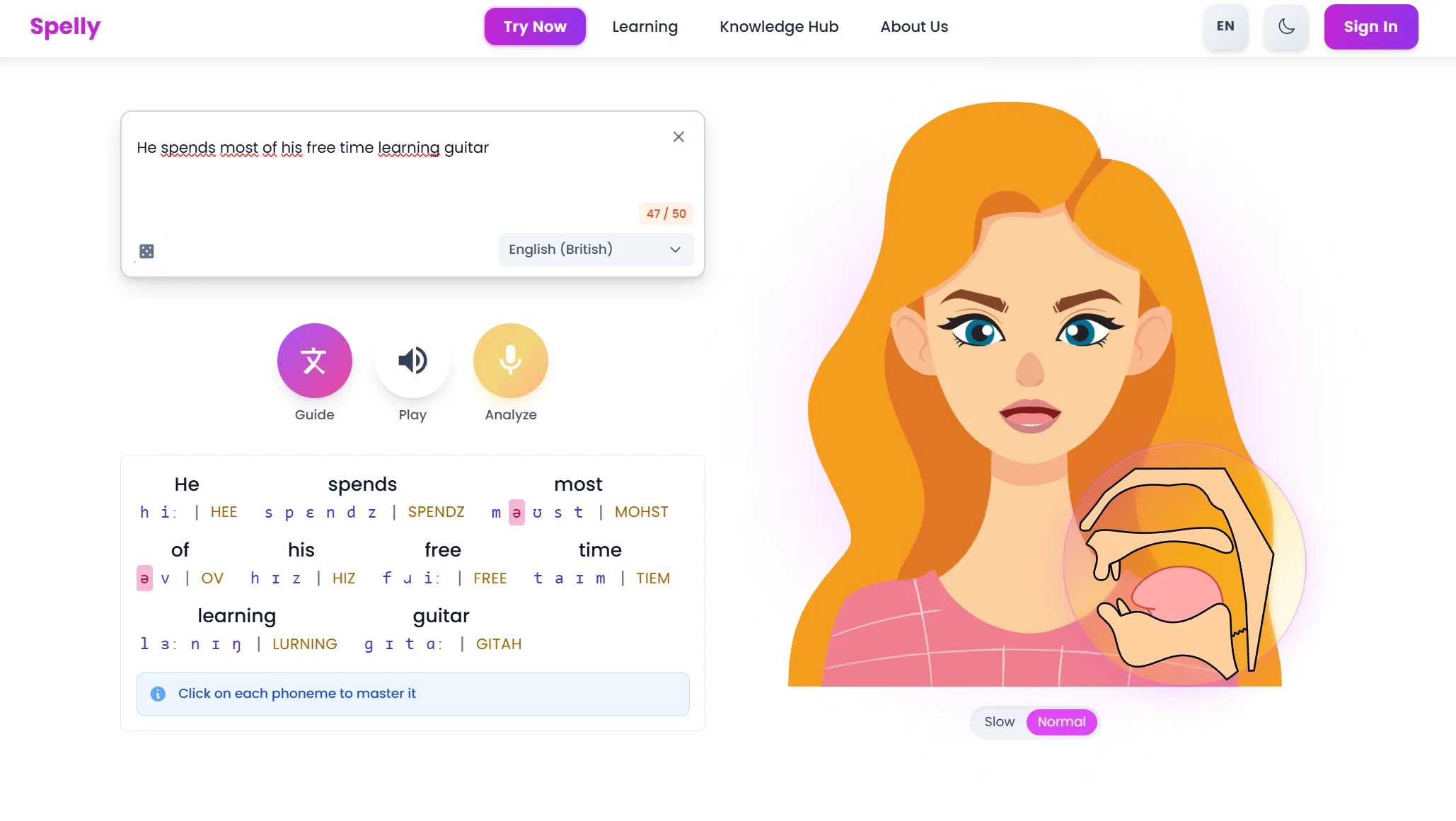
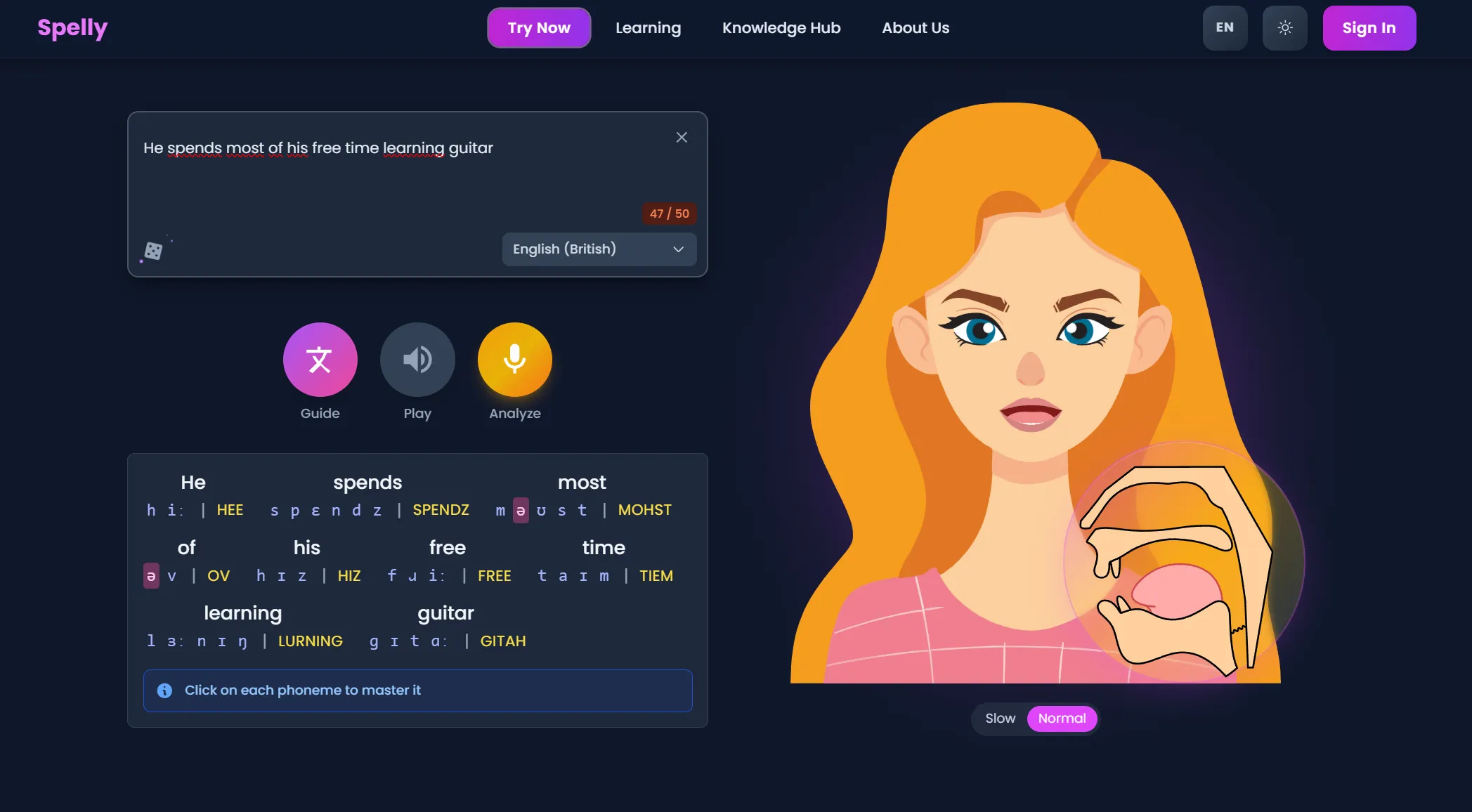
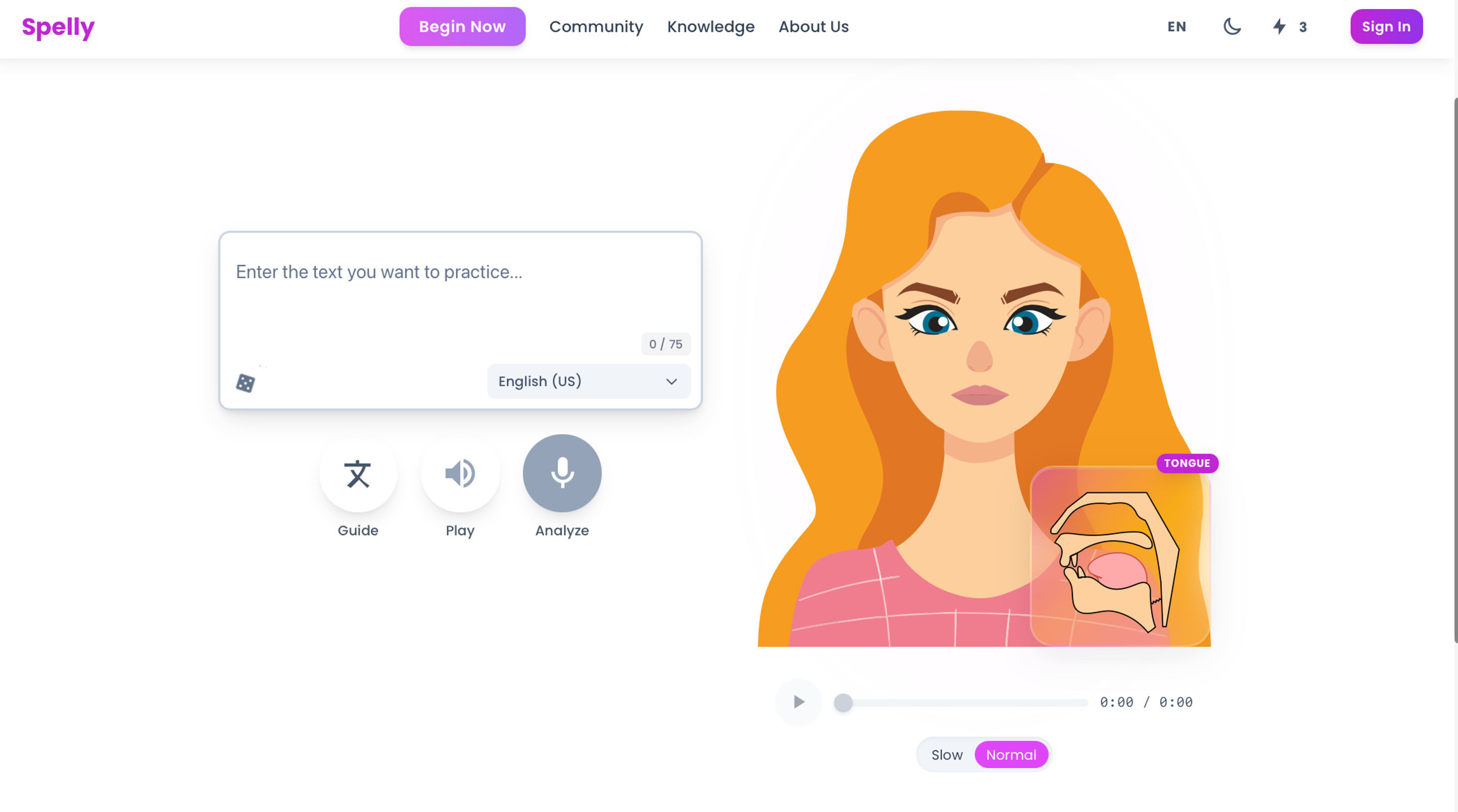
Hyper-personalized practice for any sentence or word. See articulation visually, explore mouth + tongue movement, and train the exact sounds you want, across multiple languages.
Learn the correct sounds instantly
Tap through phones, hear clean native samples, and compare against a synthetic reference voice made for your exact sentence or word. You always know what to aim for next.
Deep speech analysis
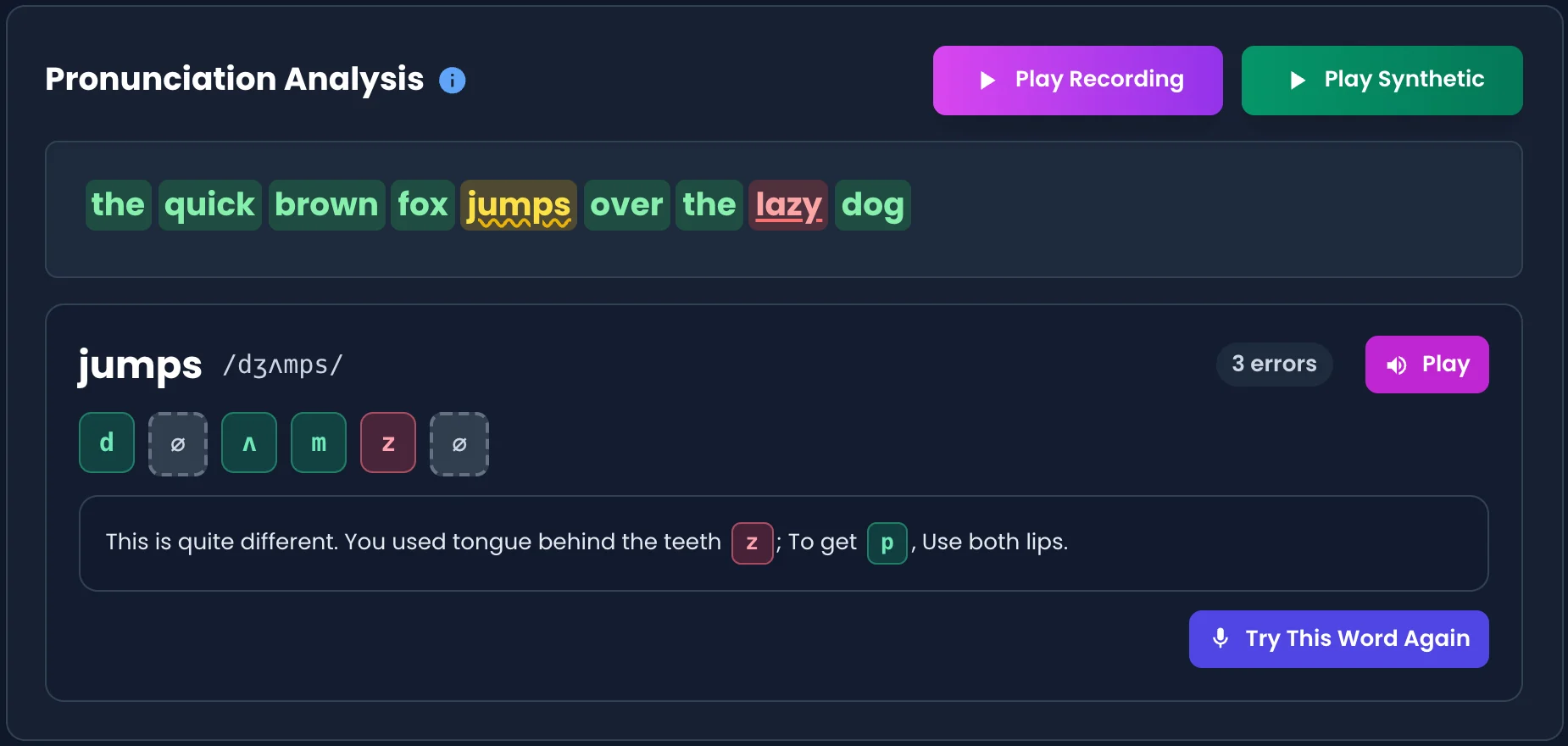
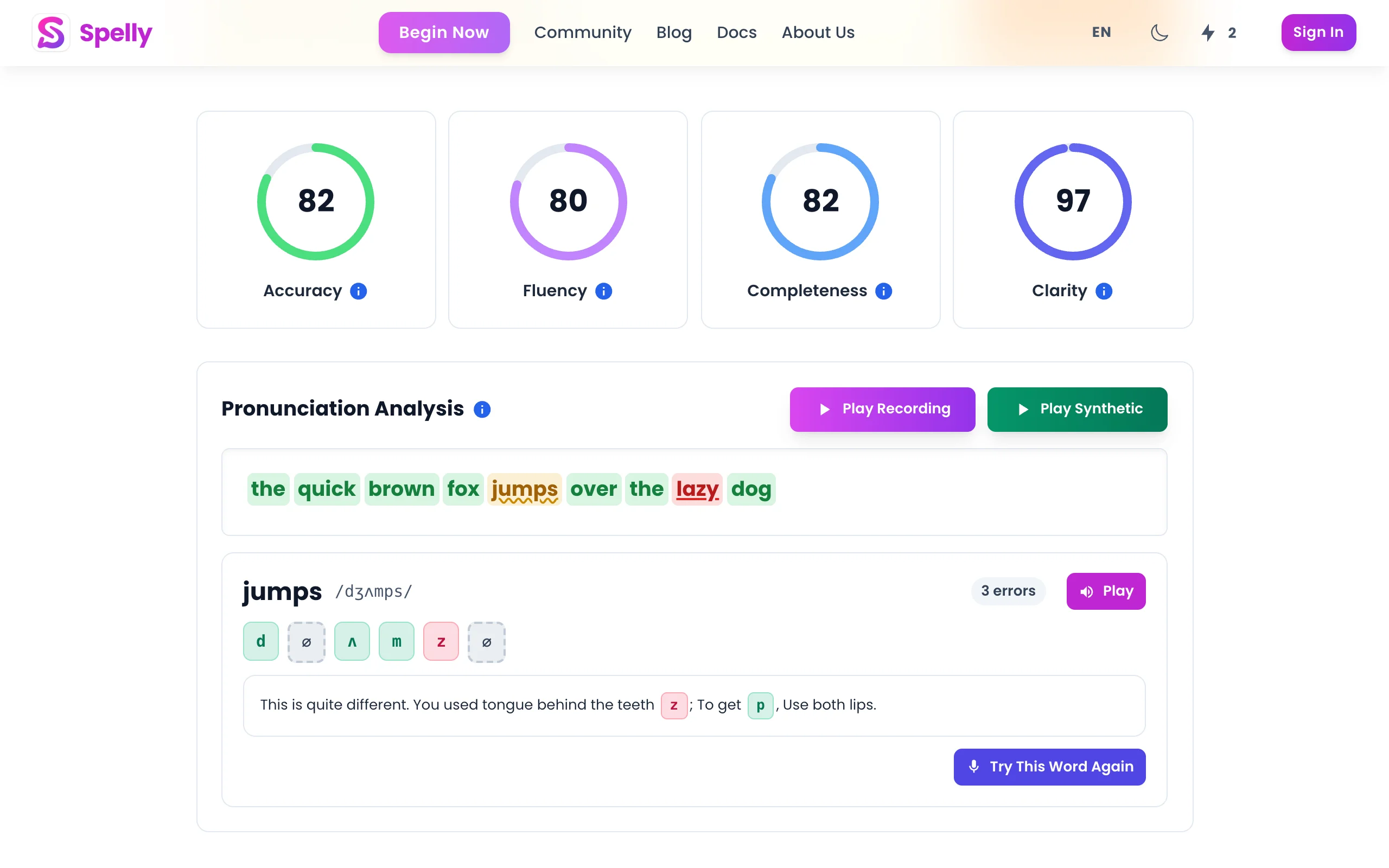
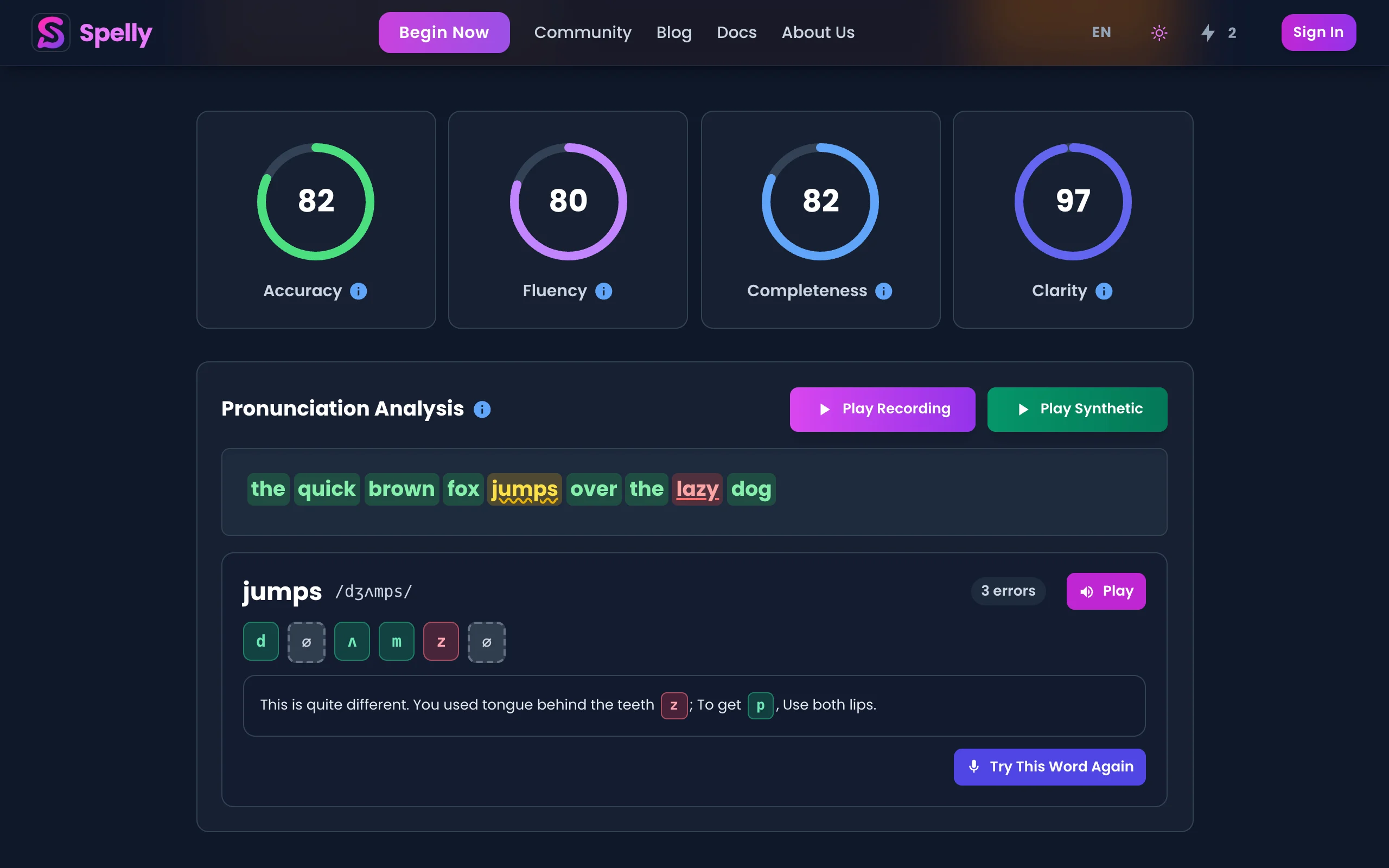
Not just a score. Spelly breaks your speech down to each detected sound with precise timing, so you can inspect what happened and why, at phone-detail level.
An intuitive learning loop
Find exactly where you miss, get a concrete remedy, then try again immediately. Each attempt is faster, more focused, and reinforces the right movement until the sound sticks.
Your personal sound fingerprint
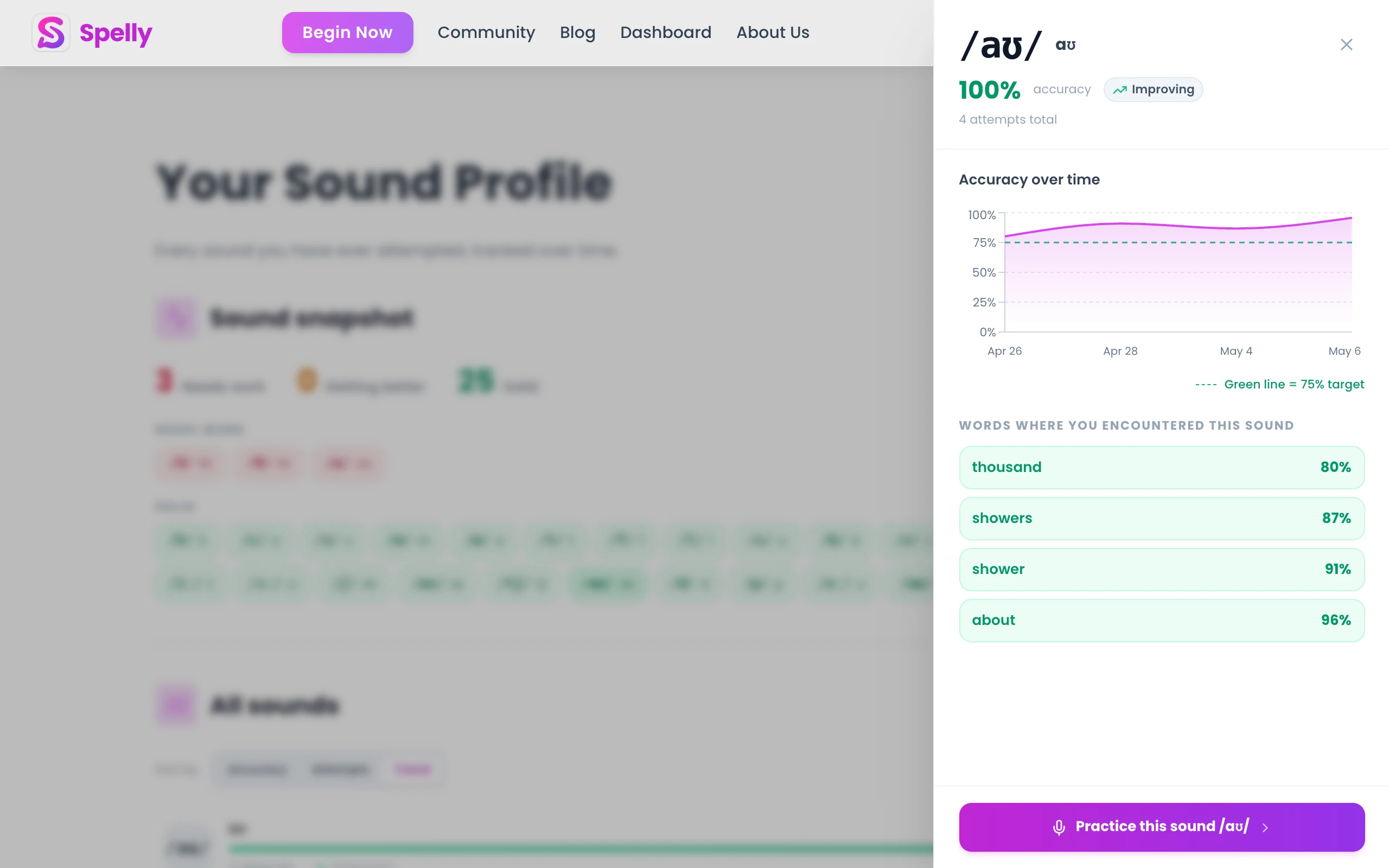
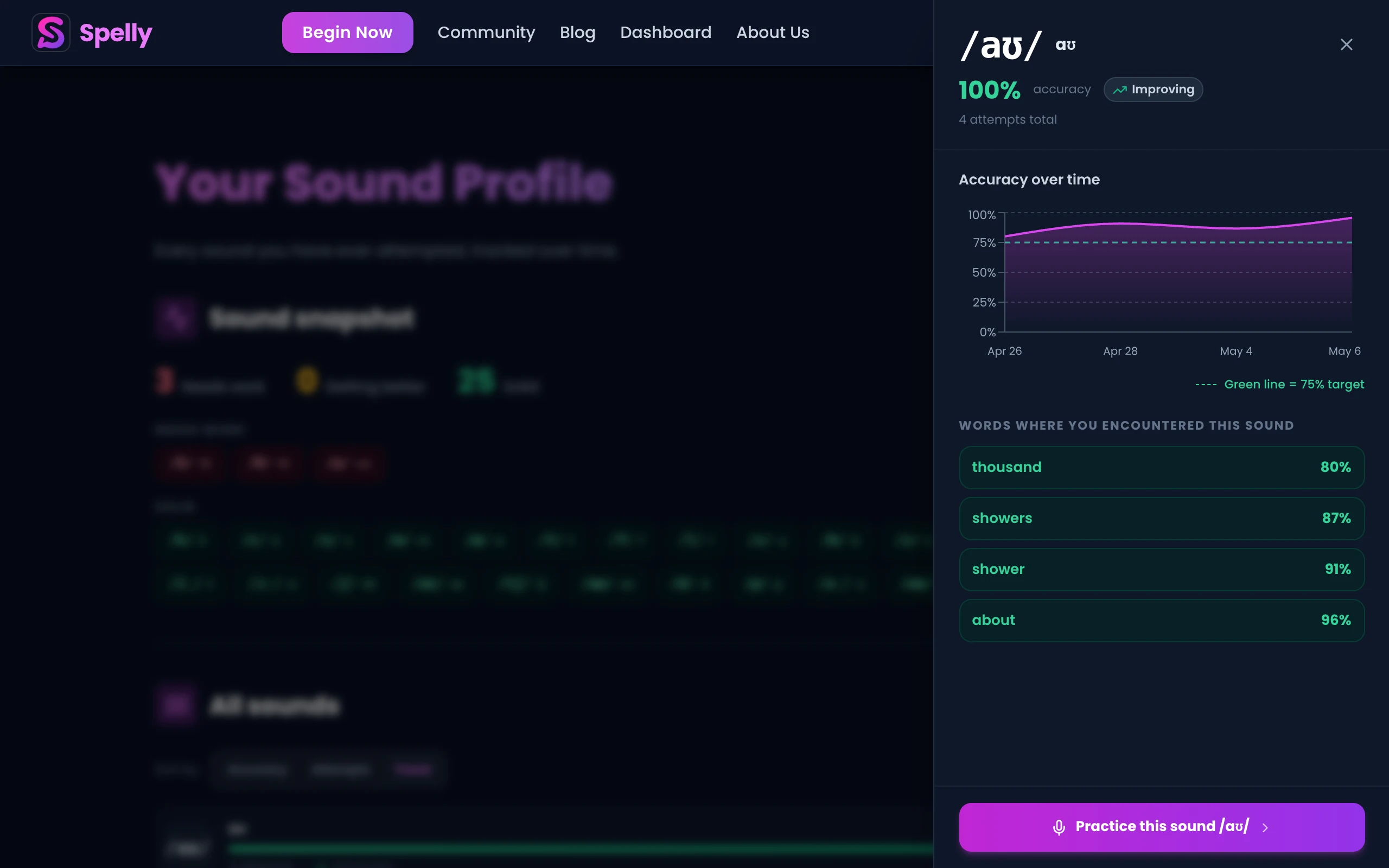
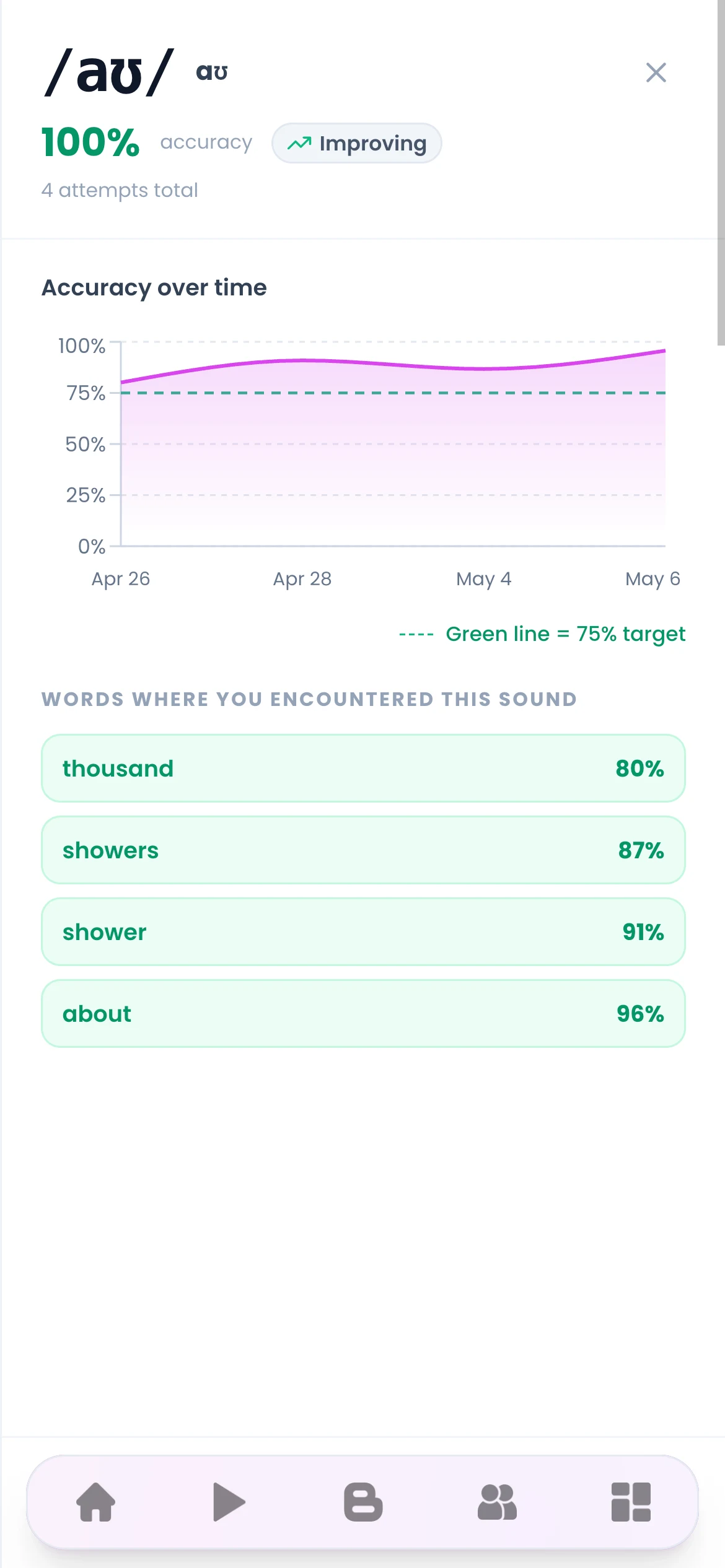
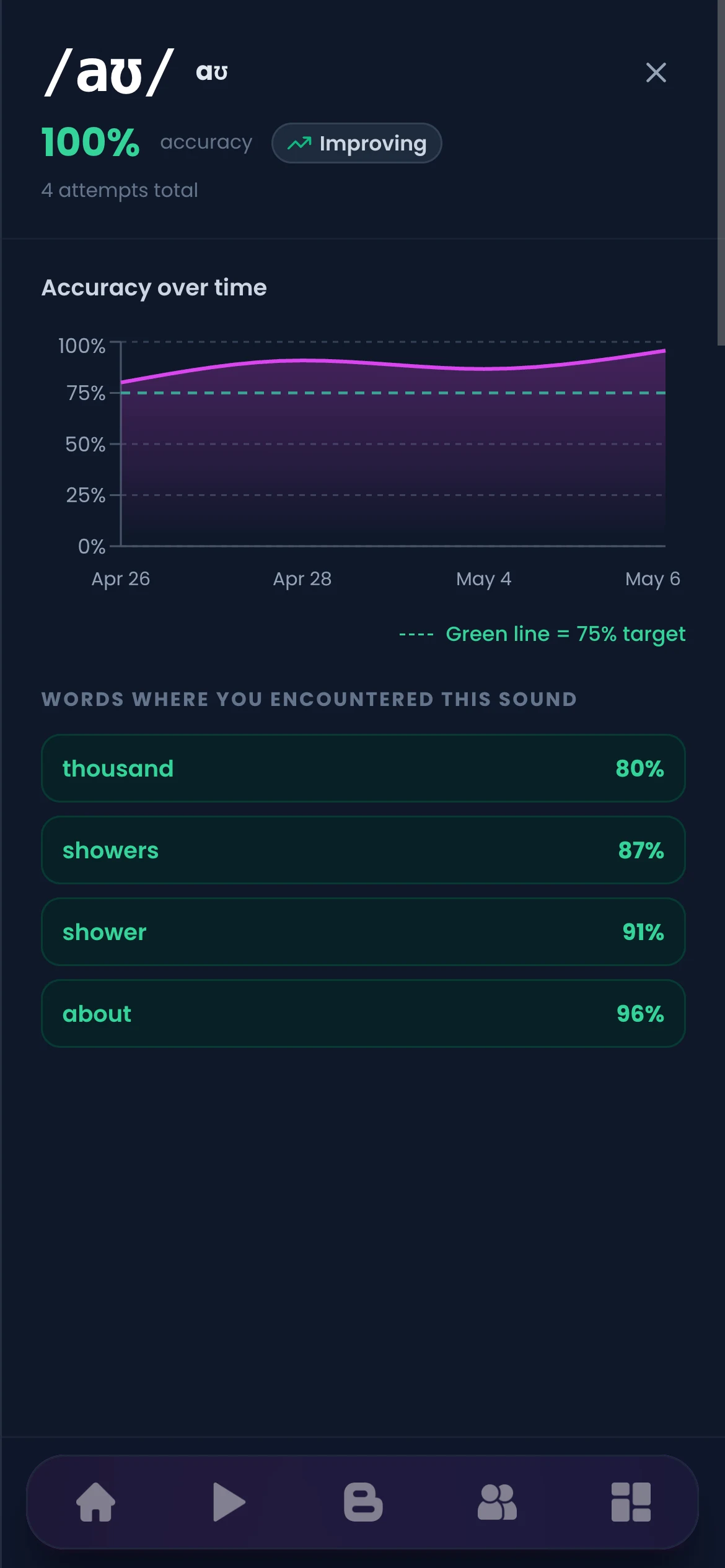
Spelly builds a phone-level profile from every session you practice. See which sounds you consistently nail, which need more work, and exactly how your accuracy on each has shifted.
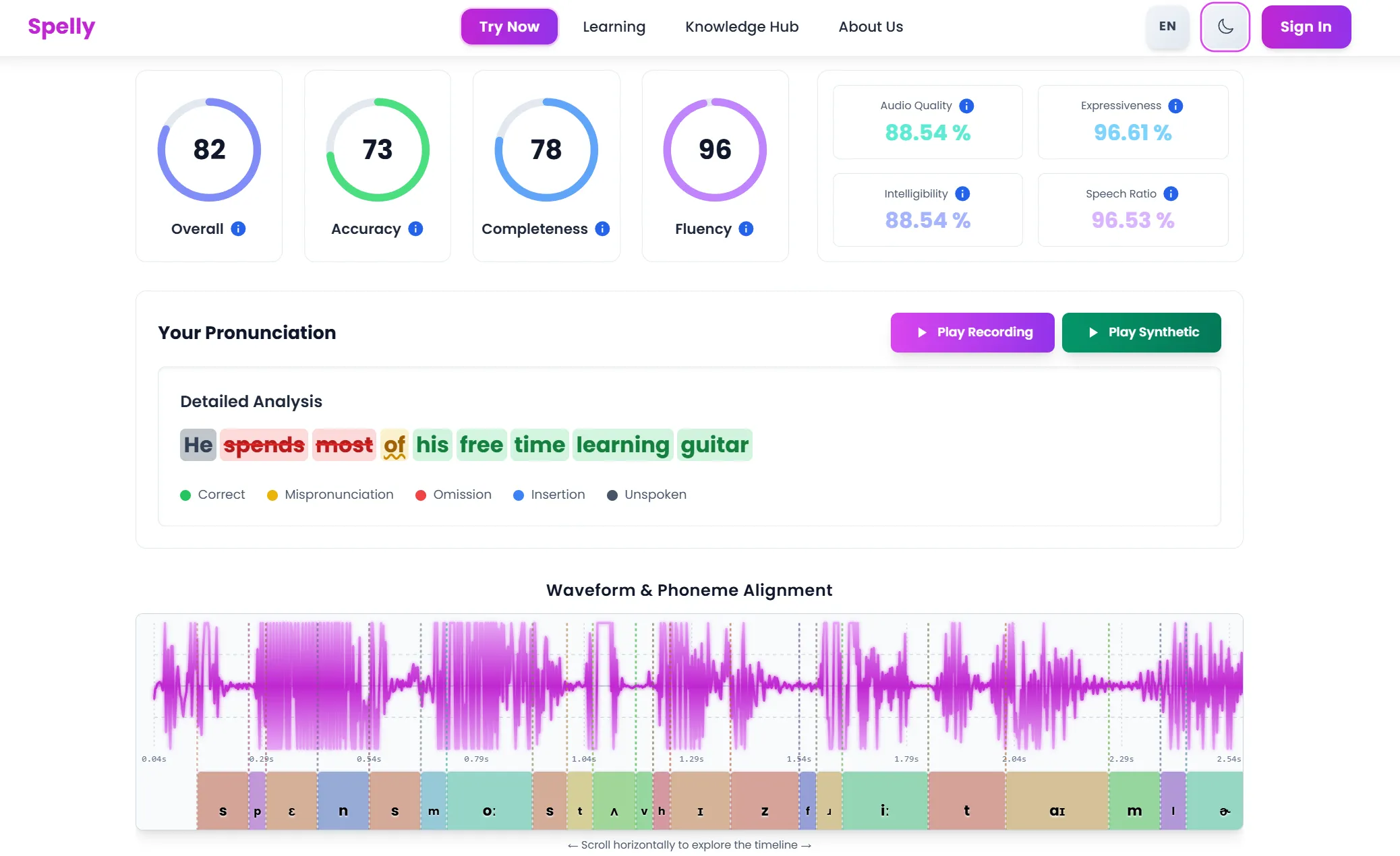
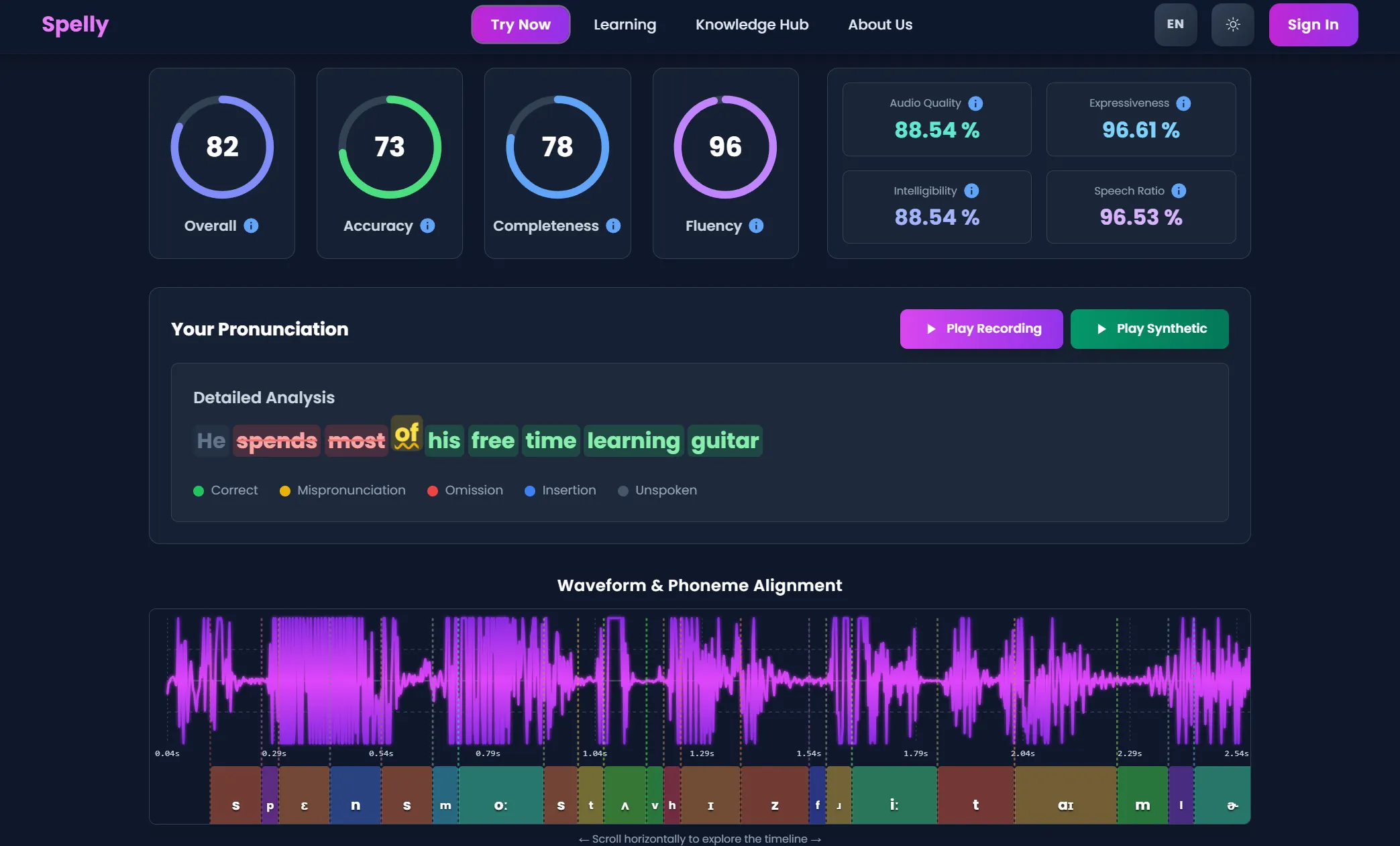
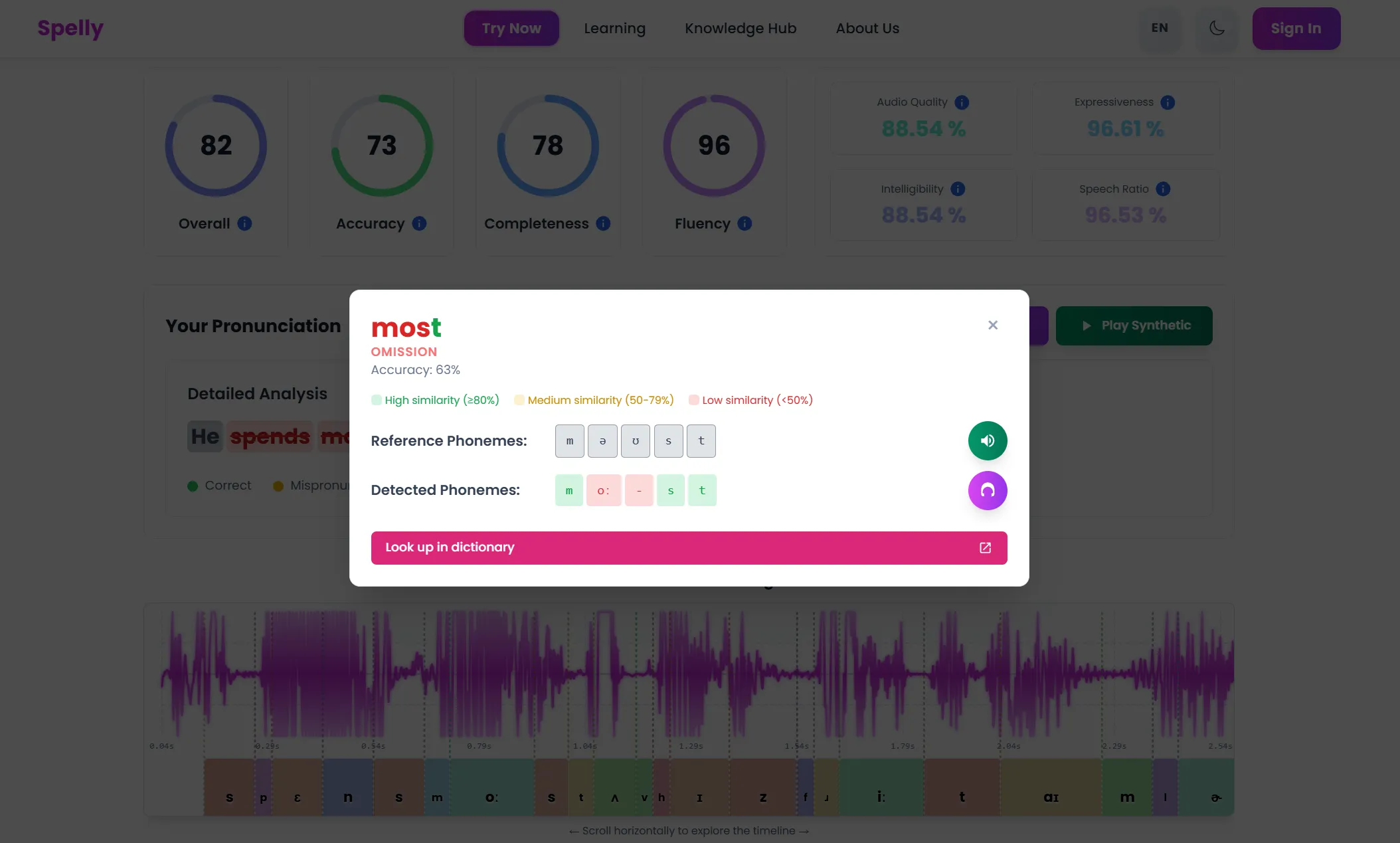
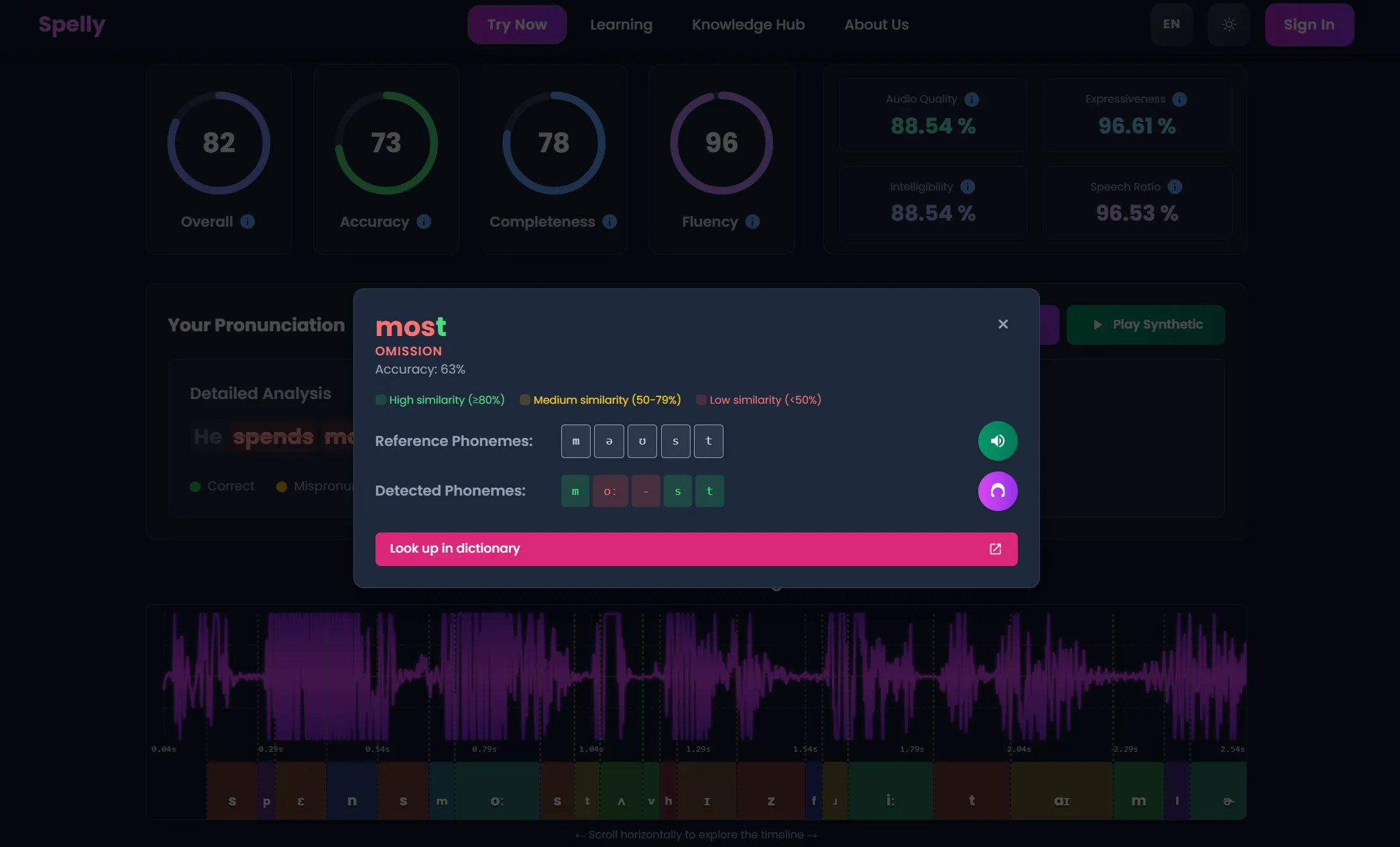
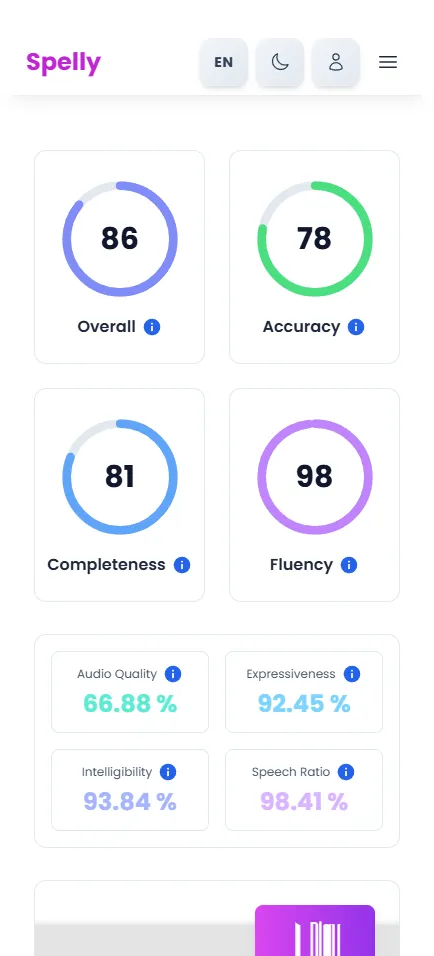
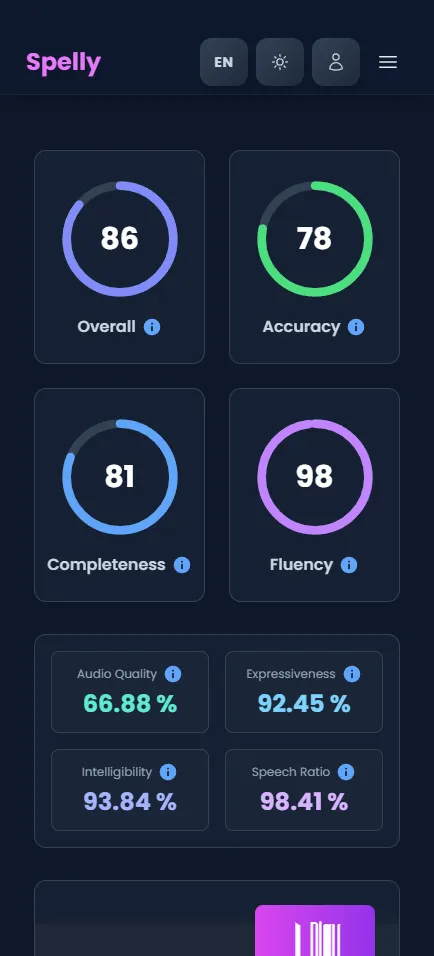
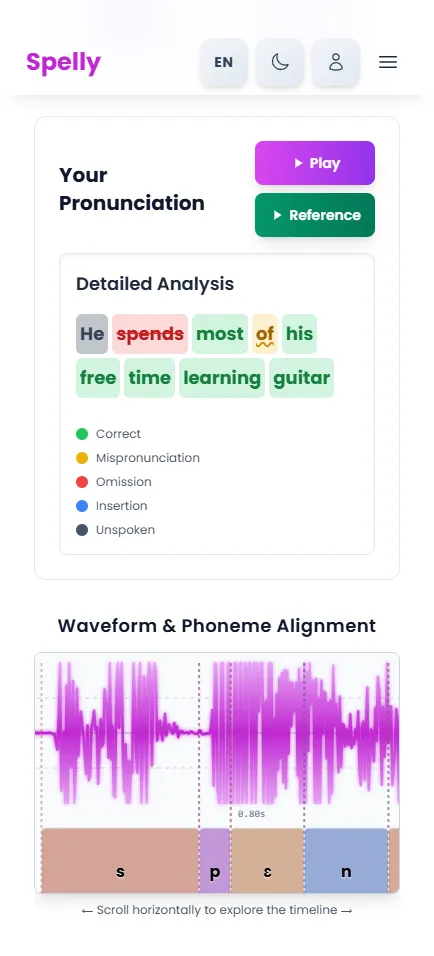
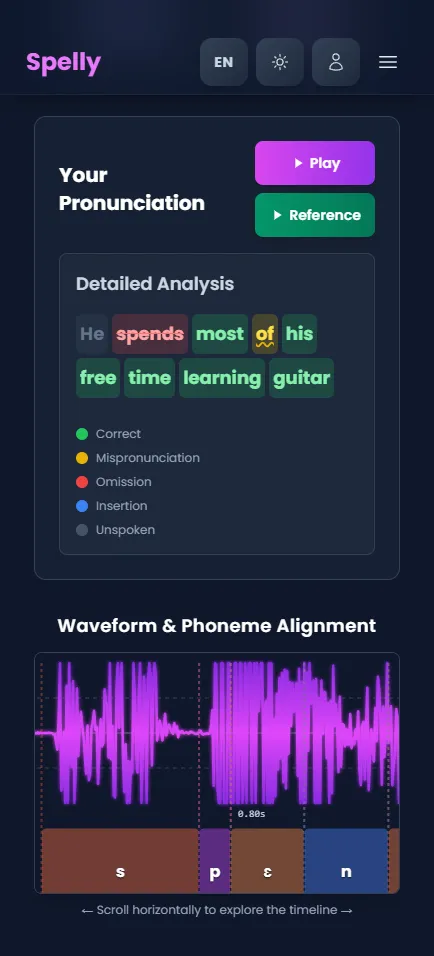
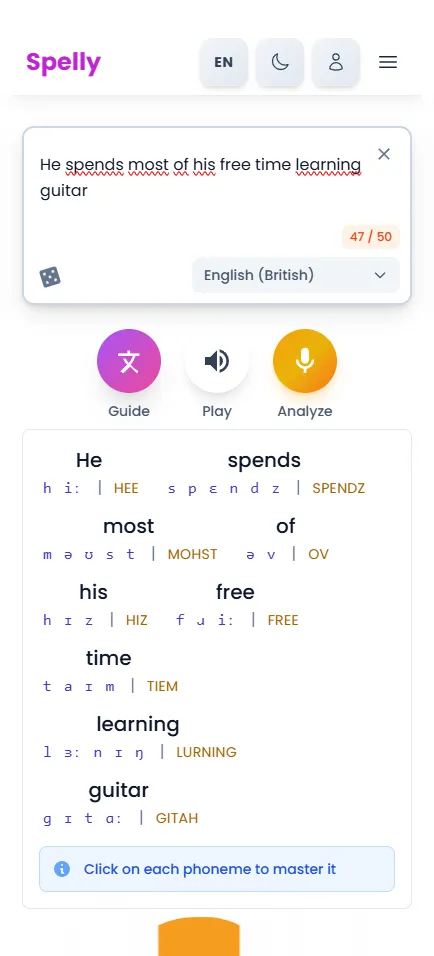
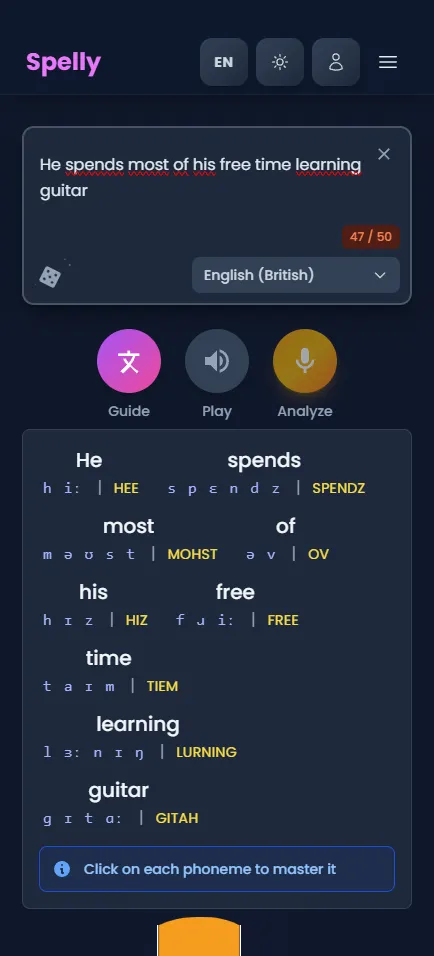
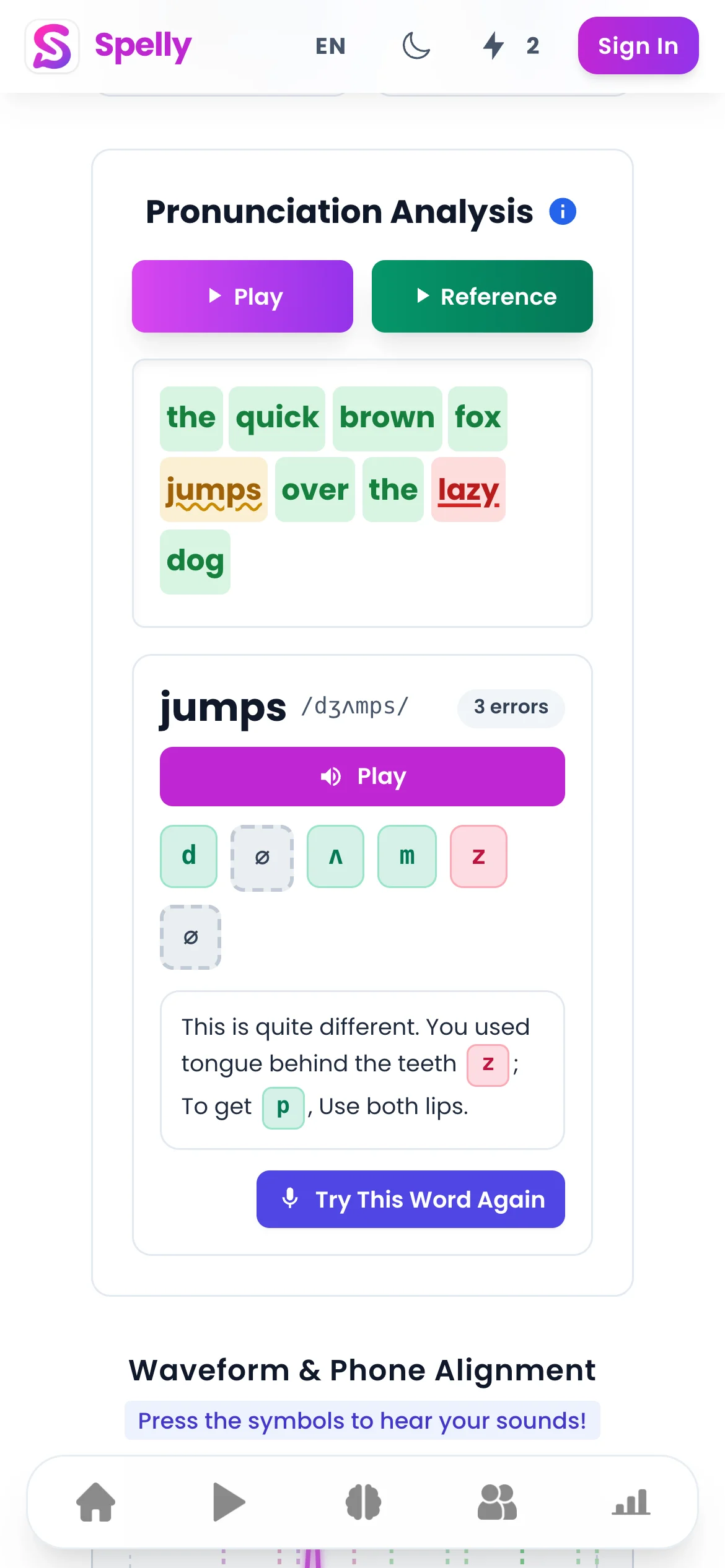
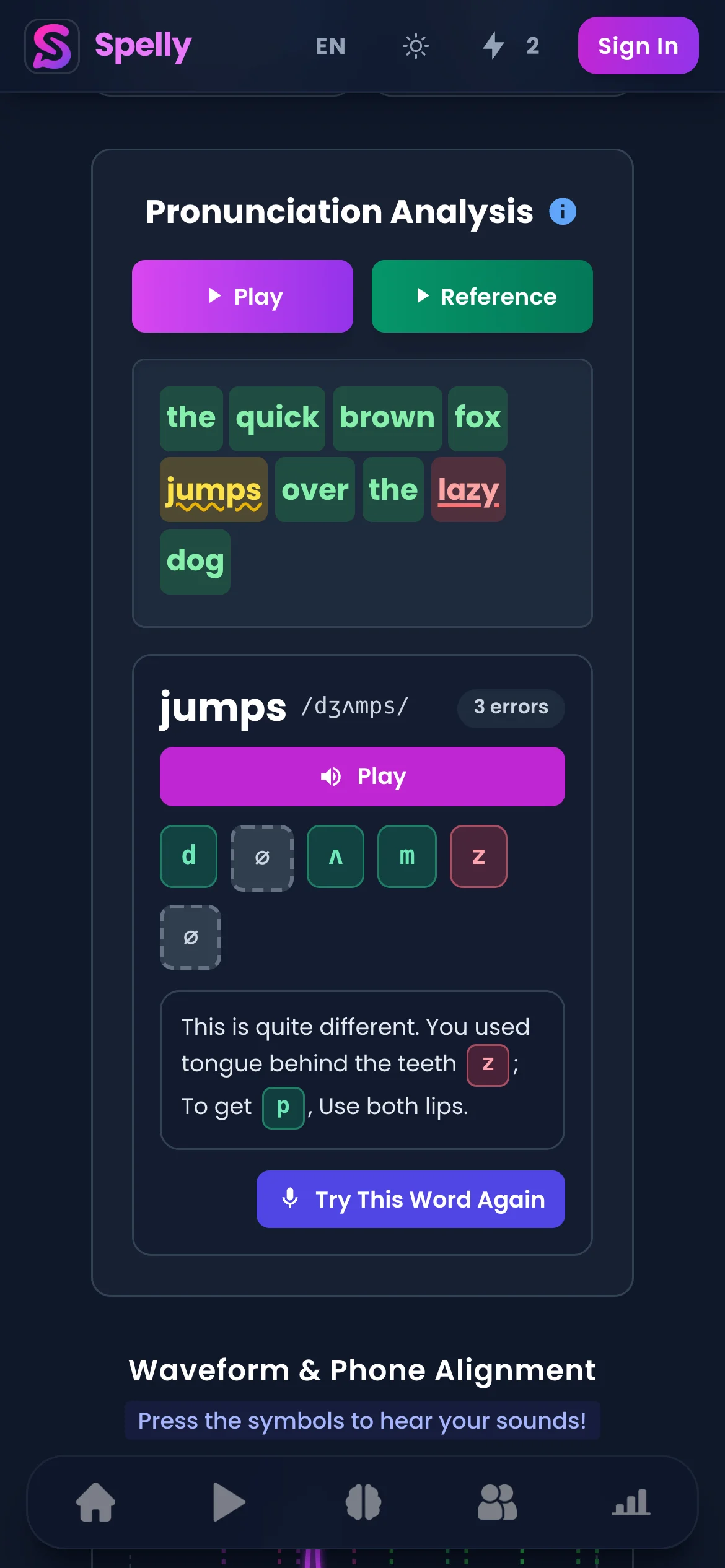
Discover Spelly in Action
Watch how Spelly turns your speech into clear scores, word-by-word guidance, and practice you can feel working.
Spelly on every website you need
Highlight any sentence on any website, right-click, and practise your pronunciation on the spot. Carry Spelly with you like a personal coach.
 Add to Chrome
Free to install · Chrome
Common questions
The ones we get asked most.
ELSA gives you a score on their content. Duolingo rewards you for completing their curriculum. Spelly analyzes whatever you need to say — your own sentences, real material from your life — and tells you exactly which sounds you're getting wrong and why. Your pronunciation coach travels with you.
Hard no. A teacher designs your learning journey and keeps you accountable. Spelly does something a teacher physically can't: give you detailed phoneme-level feedback on every single attempt, instantly, any time you practice. Most learners get a few minutes of pronunciation feedback per week from a teacher. With Spelly, every recording gets analyzed. The teacher decides where you're going. Spelly tells you exactly how you're sounding, every step of the way.
Absolutely! And it's actually one of the best fits. We offer a white-label platform, an API, and an embeddable widget for institutions. We're more than happy to scope a short call to find the right setup for your use case.